 St Albans AL1 3JJ
 Michele head, consultant clinical psychologist
Breathing Space Psychology
Choosing the right therapy to meet your needs.

5.0 out of 1,110+ Reviews.
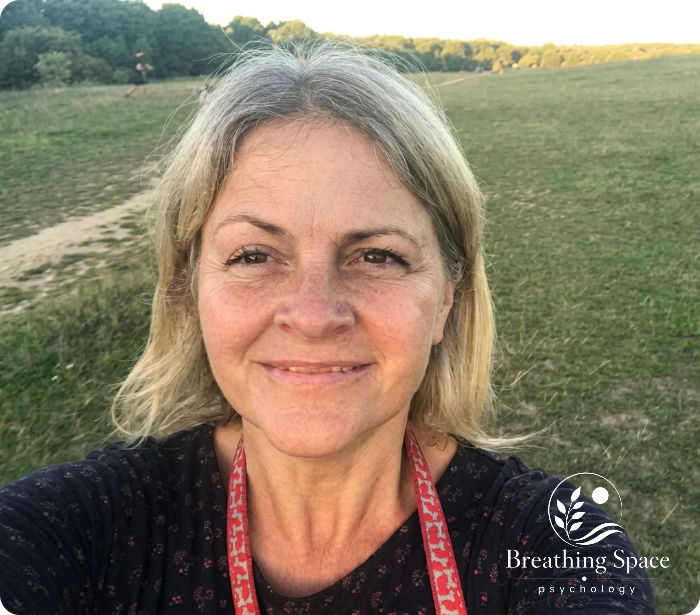
Michele is a consultant clinical psychologist, based in St Albans, who has worked across the NHS and charity sectors for over 25 years. She also offers training and supervision and lectures on the Royal Holloway (University of London) doctorate clinical psychology course. She is registered as a Chartered clinical psychologist and Associate Fellow with the British Psychological Society; and as a Practitioner psychologist with the HCPC. She can offer therapy in English and French.
Michele believes in getting the right fit for the right person. She is trained in several approaches and will talk through and adapt therapy to the needs of the person. These approaches include EMDR, CBT, DBT (including DBT-PE), NET, systemic, psychodynamic, attachment-based work, ACT, DDP, CFT and IFS.
Michele has worked across various settings, age groups and difficulties. She can help with the following challenges, as examples, but is happy to talk through other situations you may be facing:
Anxiety- depression- autism and neurodiversity- trauma, PTSD and complex trauma- anger- suicidality- emotional, physical and sexual abuse- domestic violence- divorce or separation- sexuality- bereavement- impulsive behaviour- self-harm- managing bipolar- eating difficulties- substance misuse- OCD- managing chronic health conditions- pain management- thinking about parenting challenges- complex emotional needs- self-esteem- adapting to life transitions, including injury- perinatal support- couple difficulties- issues at school- victim support- substance misuse- stress- emotional regulation- hearing voices.
Therapy may also be exploratory and not fit a particular category or ‘box’. You may be struggling or unhappy in life, want to think through relationships, work, or past experiences. Michele also has particular interest in helping foster carers, children in care and people affected by adoption.
Adults, children, young people, couples and families are welcome, as are all forms of diversity.
It can be a big step to reach out for support. Michele aims to make this as stress-free as possible, will make adjustments when helpful and fosters a down-to-earth and non-judgmental approach.
At Breathing Space we provide a safe, compassionate and non-judgmental space where you can explore your difficulties and experiences at your own pace. Our approach is integrative, meaning we combine the best combination of therapeutic approaches to meet your needs. We are trauma-informed and all therapies used are evidence-based and NHS-approved.
We help you open up about what is tricky at the moment, think about contributing factors, build on your strengths and gain new insights and skills. We help you to better understand your difficulties, within you own personal context, so that you can think about what might be the next steps.

Contact us via our form or call 07941 186842 You will be offered a free 20 mins no-obligation consultation.
If you want to proceed, you can book an appt.

This will explore your difficulties in a confidential space and we can begin to understand what you are dealing with. It is a time for you to check that you feel you can work with the therapist and whether you feel safe and heard. Each therapist has a different style and it is important that you feel comfortable with what is on offer.

If you feel you want to work with Michele, you can outline a clear plan together. You can stop at any time, but hopefully you will feel that the number of sessions, approach and pace feel right for you.

You are the first person who has listened to me and that I feel really understood..


Thank you for supporting me, for your warmth and allowing a safe and honest space to discuss clients..
Some people are born to teach and Michele is one of them..
My son told me that his session was 9 out of 10, which is incredible, as he felt very anxious and said he had felt very comfortable. I later asked him what was the best thing he had done this week and he said it was his appointment with you..
Some people are born to teach and Michele is one of them..
Michele offers the following approaches: EMDR, DBT, psychodynamic, systemic, ACT, NET, DDP, CFT, IFS, CBT and attachment-based work. You can read more about these in the ‘Therapeutic approaches’ section. She will match the right approach to your difficulties, what you are struggling with, your strengths, skills you might need, whether your history is contributing to the difficulties, etc. In psychology this is called a ‘formulation’—getting an understanding of the difficulties and what might help to move things forwards. There can be different reasons for something that is feeling problematic and something that looks the ‘same’ on the surface may be influenced by very different factors.
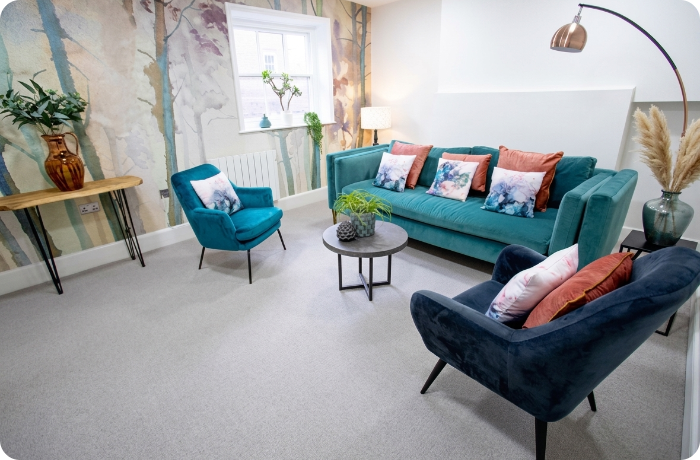
Ring the bell at the door, let them know who you are seeing. Someone will let you in and will show you to the waiting room. I’ll find you there and we shall go to the therapy room.
We shall get to know each other. You can tell me a bit about what you are struggling with and we can start to understand this a bit more. Usually you should have a bit more understanding of what has led to the difficulties and/or how to manage them after a first session, perhaps making links with previous experiences, perhaps learning ways to cope; but this is an ongoing process. The first session is about starting to feel safe with me, seeing if you feel understood by me, seeing if you think you can work with me and if you think more sessions are likely to be helpful. It’s also okay to want to try out a few therapists and see who you want to work with.
This depends on the person and the difficulty. Sometimes people just need a couple of sessions and they can always come back if they need to think more about something. Usually people benefit from around 20 sessions. Some people need more. We can think about this together and you may have an idea of how many sessions you are able to commit to. We can then try and use these sessions in a focused way. There is also the option to do some intensive sessions, then space these out more.
£140 for 55 mins.
Yes, by the British psychological society as a chartered clinical psychologist and by the HCPC (Health and care professions council) as a practitioner psychologist. Clinical psychologists have a degree in psychology, several years of experience before they complete a further three years of postgraduate training as a clinical psychologist for three years. They have experience across the age spans, across various difficulties and using a range of approaches. They are supervised closely throughout their careers and think about how the therapy matches the person’s needs. Michele has over 25 years of experience in the NHS and similar settings.
NICE guidelines recommend scientifically supported treatments for healthcare, that are evidence-based and recommended for the difficulties of the person. Michele will above all take into account your difficulties and what would suit these; but only offers evidence-based and NICE-approved treatments.
55 minutes. Typically EMDR requires a longer session; but this can be discussed.
Sessions are confidential. I usually let your GP know that I am seeing you, but we can agree how much detail you want me to put in this. I do have to break confidentiality if I feel you are a risk to yourself or to someone else. I would always discuss this with you to assess carefully whether this were needed. It is important to balance keeping you and others safe with sessions also feeling safe for you. I would be happy to talk about this more with you, if you are worried.
© Copyrighted 2026 Breathing Space Psychology. All Rights Reserved.